

appledentalcenter.com

External link opens in new tab or window

Dr. Laquita Rhone
1120 West Pioneer Parkway
Arlington, Texas 76013


1120 West Pioneer Parkway
Arlington, Texas 76013


External link opens in new tab or window

Menu
  • External link opens in new tab or window
  • External link opens in new tab or window
  • External link opens in new tab or window
  • External link opens in new tab or window

Exceptional Dental Care

Learn About Proper Oral Hygiene

One of the most important things dentists can do for their patients is to provide education about good oral hygiene. It is amazing how many patients, adults included, have never been shown how to properly floss or brush their teeth correctly. The dental staff at Apple Dental Center considers it our obligation to provide our patients with information on common oral health problems, dental treatments and good oral hygiene.


Why You Should Have Your Teeth Professionally Cleaned

 
1. To remove food, beverage, or tobacco stains on the surface of your teeth that cannot be removed with regular brushing and flossing.

2. To remove tartar, a hardened substance that makes keeping your teeth clean difficult.

3. To prevent gum disease, a condition that may lead to loss of your teeth and other serious health problems.

4. To learn about the best way to keep your teeth clean on a daily basis.

5. To keep your teeth healthy, which will keep your body healthy overall.


There’s no question that having a clean, healthy smile can make you feel good about how you look and how you feel. Although you may do a thorough job brushing and cleaning between your teeth each day, your smile needs and deserves a regular professional cleaning, also known as a dental prophylaxis, at the dental office. That’s because plaque, a clear, sticky film of bacteria, constantly forms on teeth. As plaque collects it forms a hard layer of tartar, or calculus, especially in hard-to-reach areas near the gum line and between teeth.


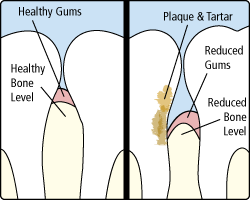
The bacteria found in plaque create toxic chemicals that irritate the gums, causing the gums to become inflamed or bleed easily. If the irritation continues for some time, the gums may pull away from the teeth, forming pockets that collect more bacteria. Eventually the gum tissue and underlying bone may be destroyed and teeth may become loose.


Recent research suggests there may be a link between gum disease and other health concerns such as cardiovascular problems, stroke, bacterial pneumonia and increased risk of problems during pregnancy. Although more studies are needed, researchers suspect that the bacteria associated with gum disease play a role in affecting these health problems.


Preventing gum disease is an important step in maintaining overall health. You can help keep your smile healthy by brushing twice a day and cleaning between teeth once a day with floss or other interdental cleaners (special picks or other devices that your dentist or dental hygienist may recommend) to remove plaque between your teeth and below your gum line that a toothbrush can’t reach. When choosing a dental care product, look for those that display the American Dental Association’s Seal of Acceptance, your assurance that they have met ADA standards of safety and effectiveness. While brushing and cleaning between teeth will help remove a great deal of plaque, it’s nearly impossible to eliminate all of it. And once plaque hardens into tartar, the only way it can be removed is with professional teeth cleaning at a dental office. (End Bold)Besides having your teeth cleaned, regular dental visits are crucial to preventing tooth decay, gum diseases and other disorders that affect the mouth and your overall health.


During the cleaning, the dentist or dental hygienist will remove the hardened deposits with special tools. They may use an ultrasonic machine that produces sound waves to vibrate free the hard deposits.


After the teeth are cleaned, they may be polished with a mild compound that is applied with a spray or small rotating cup. Polishing the teeth helps remove stains on the outer surface of your teeth.


To help prevent tooth decay, your dentist may recommend a fluoride treatment or a dental sealant. Fluoride strengthens tooth enamel and a dental sealant protects the chewing surfaces of teeth from plaque bacteria. Although these treatments are commonly recommended for children and adolescents, adults also can benefit from them.
Preventive Dentistry


Teeth Whitening

Cosmetic whitening enhances your natural smile


Your habits can affect your smile! Tobacco use and drinking red wine, dark berry juice, coffee, tea or cola over time shows in your smile. Teeth that are stained and discolored detract from your overall appearance, while sparkling white teeth can dramatically improve your face value! Whether your style is classically elegant or denim casual – a great smile, free of unsightly stains, improves the appearance of your teeth and adds a healthy glow to your overall appearance.


Your smile reflects your image


Your smile is a big part of the image you reflect – it’s noticed before you even speak a word. If your teeth are stained or yellowed with age, they may have a negative impact on people around you and you may not realize it. Advances in cosmetic dentistry have made it possible to offer several whitening treatment alternatives. Your dentist will determine which type of whitening procedures will work best for your specific situation.


Cosmetic whitening enhances your smile


Cosmetic whitening, also referred to as “bleaching”, is one of the most requested treatments to remove stains and improve the overall appearance of your smile. There are several treatment options you can choose from. Chairside whitening treatments are completed in your dentist’s office, or your dentist may recommend treatment that can whiten your teeth in the comfort of your own home.


Chairside whitening treatments can be completed in a matter of hours or over a several week period, depending on the type of whitening solution and technique your dentist determines is best for you. Whitening appointments are commonly scheduled one week apart and continue until the desired level of whiteness is reached. A single treatment lasts between half an hour to an hour. In some cases a chemical whitening agent is applied to your teeth and allowed to remain on the teeth for 10 to 30 minutes using a special high intensity light that activates the agent.


Your dentist may recommend a special formula for at-home whitening. This type of treatment involves wearing a custom-fitted plastic tray the dentist will design for you. Care is taken in creating the tray to ensure the whitening material stays in contact with tooth surfaces being treated. The custom tray is made of clear plastic, so you can wear it comfortably as prescribed by your dentist. The duration of each whitening treatment and how long you continue at-home treatments will vary according to the results you wish to achieve. Ask your dentist for his or her recommendation on how long your treatments should continue.


The result from either treatment option is a bright, white smile that helps you project an image of youthful vitality. Whiter teeth create a more youthful appearance by brightening your entire face. People may notice something has changed about you… they’re just not sure what it is!


Empower yourself with a youthful smile


More and more Americans believe their image is important and have turned to whitening to help upgrade their appearance.

Porcelain Veneers

Veneers are very thin pieces of durable, tooth-shaped porcelain that are custom made (for shape and color) by a professional dental laboratory. They are bonded onto the front of teeth to create a beautiful and attractive smile.


Veneers can completely reshape your teeth and smile. They can often be alternatives to crowns and the ideal solution in treating many dental conditions.


As with most dental restorations, veneers are not permanent and may someday need replacement. They are very durable and will last many years, giving you a beautiful long lasting smile.


Reasons for porcelain veneers:


  • Cosmetically, to create a uniform, white, beautiful smile.

  • Crooked teeth.

  • Misshapen teeth.

  • Severely discolored or stained teeth.

  • Teeth that are too small or large.

  • Unwanted or uneven spaces.

  • Worn or chipped teeth.


What does getting porcelain veneers involve? 


Getting veneers usually requires two visits to complete the process, with little or no anesthesia required during the procedure. The teeth are prepared by lightly buffing and shaping the surface to allow for the thickness of the veneer. A mold or impression of the teeth is taken and a shade (color) will then be chosen by you and the dentist.

On the second visit the teeth will be cleansed with special liquids to achieve a durable bond. Bonding cement is then placed between the tooth and veneer and a special light beam is used to harden and set the bond.


You will receive care instructions for veneers. Proper brushing, flossing and regular dental visits will aid in the life of your new veneers.

Sealants

What is a Sealant?


It is a plastic material (resin) applied to the chewing surfaces of the back teeth – the premolars and molars. The resin bonds to the depressions and grooves (called pits and fissures) in the back teeth. A sealant is a barrier that protects tooth enamel from plaque and acids.


WHY ARE SEALANTS NECESSARY? 


The back teeth have uneven pits and fissures that are difficult to keep clean because toothbrush bristles cannot reach into them. The pits and fissures hold plaque and food debris. Most tooth decay occurs in these hard-to-clean grooves. Sealants form a thin covering to keep out plaque and debris and decrease the risk of decay.


HOW ARE SEALANTS APPLIED?


It takes only a few minutes to seal each tooth. The procedure which is virtually painless, rarely involves drilling or anaesthesia.


The teeth are cleaned and chewing surfaces are conditioned to help the sealant adhere to the tooth. The sealant is “painted” on the chewing surface, where it flows into the pits and fissures, bonds to the tooth, and hardens. A special curing light may be used to help the sealant harden.


HOW LONG DO SEALANTS LAST?


As long as the resin remains intact the chewing surface is protected from decay. Sealants hold up well under the force of normal chewing.  They usually last several years before reapplication is needed. The dentist checks the condition of the sealants during a check-up.


CAN SEALANTS PROTECT AGAINST ALL DECAY? 


Sealants protect the chewing surfaces. Good oral hygiene at home and regular dental check-ups and professional teeth cleaning are important to prevent tooth decay in between the teeth – spots that sealants cannot cover. To prevent cavities from forming between teeth (called interproximal decay), floss or use an interdental cleaner once a day and brush twice a day. Look for products that display the ADA Seal of Acceptance, your assurance that the product has met the ADA’s criteria for safety and effectiveness.


WHO IS A CANDIDATE FOR SEALANTS?


Children and teenagers are primary candidates for sealants because the likelihood of developing decay begins as soon as the back teeth appear. Sealants are usually placed on the surfaces of teeth that have not been previously filled and show no signs of decay. Adults can benefit from sealants too. Prevention is always better than treatment. Sealants are extremely effective in preventing tooth decay on the back teeth and can save patients money in the long run.


Tooth decay often occurs in the grooves on the chewing surfaces of the back teeth where plaque tends to accumulate. Sealants serve as a barrier against tooth decay.


What causes tooth decay?


Teeth are covered with plaque, a sticky film of bacteria. The bacteria convert sugar and starch into harmful acids that attack tooth enamel. Repeated attacks may cause the enamel to break down, resulting in cavities.

Treatment


Root Canal Therapy


In the past, if you had a tooth with a diseased nerve, you'd probably lose that tooth. Today, with a special dental procedure called root canal treatment, you may save that tooth.
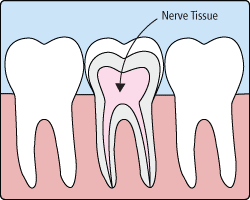
Inside each tooth are both the pulp and the nerve. The nerve is the vestige of the tissue that originally formed the tooth. Once the tooth has been in the mouth for a time, the functioning of the nerve is no longer necessary.

When a tooth is cracked or has a deep cavity, bacteria can enter the pulp. Germs can cause an infection inside the tooth. Left without treatment, pus builds up at the root tip in the jawbone, forming a "pus-pocket" called an abscess. An abscess can cause the pulp tissue to die. When the infected pulp is not removed, pain and swelling can result. Certain byproducts of the infection can injure your jawbones and your overall health. Without treatment, your tooth may have to be removed.

Treatment often involves one to three visits. During treatment, your general dentist or endodontist (a dentist who specializes in problems of the pulp) removes the diseased pulp. Next, the pulp chamber and root canal(s) of the tooth are cleaned and sealed. Often posterior teeth that have endodontic treatment should have a cast crown placed in order to strengthen the remaining structure. Then, as long as you to continue to care for your teeth and gums with regular brushing, flossing, and check-ups so that the root(s) of the restored tooth are nourished by the surrounding tissues, your restored tooth can last a lifetime.

Most of the time a root canal is a relatively simple procedure with little or no discomfort, involving one to three visits. Best of all, it can save your tooth and your smile!

Extractions


There are times when it is necessary to remove a tooth. Sometimes a baby tooth has misshapen or long roots that prevent it from falling out as it should, and the tooth must be removed to make way for the permanent tooth to erupt. At other times, a tooth may have so much decay that it puts the surrounding teeth and jaw at risk of decay, so your doctor may recommend removal and replacement with a bridge or implant. Infection, orthodontic correction, or problems with a wisdom tooth can also require removal of a tooth.

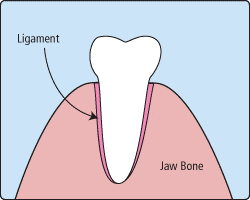
When it is determined that a tooth needs to be removed, your dentist may extract the tooth during a regular checkup or may request another visit for this procedure. The root of each tooth is encased within your jawbone in a "tooth socket," and your tooth is held in that socket by a ligament. In order to extract a tooth, your dentist must expand the socket and separate the tooth from the ligament holding it in place. While this procedure is typically very quick, it is important to share with your doctor any concerns or preferences for sedation.

Once a tooth has been removed, neighboring teeth may shift causing problems with chewing or with your jaw joint function. To avoid these complications, your dentist may recommend that you replace the extracted tooth.

Sedation Dentistry
Sedation dentistry provides safe, comfortable dental treatment for patients with special needs. Sometimes called relaxation dentistry, sedation dentistry is a method of managing pain and anxiety during professional dental care through the use of medication.

You can benefit from sedation dentistry if you experience one or more of the following: 


  • High fear of dental care

  • Complex dental problems

  • Traumatic dental experiences

  • Fear of needles and shots

  • Trouble getting numb

  • Sensitive teeth


The two most common types of sedation dentistry are:


  1. Oral Conscious Sedation

  2. Inhalation Sedation


Oral Conscious Sedation


Through this type of sedation you will experience very deep relaxation while still being conscious. Your doctor will provide you with an oral medication that is easy to swallow, safe, and low cost. Most adults will receive Halcion (triazolam), though children are usually given a liquid medication like Versed (Midazolam). When the medication takes effect, you will be able to speak and respond to external requests.

Inhalation Sedation


Inhalation sedation uses Nitrous Oxide and Oxygen (laughing gas) to help your body achieve a relaxed state. This is the most popular form of sedation used in dentistry today.
Bonding
Bonding puts your best smile forward
When you introduce yourself, enter a social gathering or business office, your smile precedes you. If you’re interested in making a favorable impression, you smile. It’s the part of you that is noticed first – even before you say a word.
Your smile is the first impression you make. The quality of your smile says a lot about who you are. A sincere smile with white, straight, beautifully shaped teeth sends a different message that an equally sincere smile with noticeable fillings, decay, chipped, or discolored teeth. First impressions are lasting. Cosmetic Bonding provides a solution that will improve the overall appearance of your teeth and enable you to make a glowing first impression and rediscover a more youthful, healthy smile.

Bonding recreates natural looking teeth


You don’t have to live with chipped, cracked, stained or discolored teeth. Advances in cosmetic dentistry have created many solutions to fashion your picture-perfect smile. The color and shape of your teeth can be changed to create a new whiter, brighter smile and a more youthful appearance.
Bonding applies composite resins to the surface of the tooth to improve appearance or restore the tooth to its original, healthy state. Bonding creates solutions by:

  • Closing gaps between teeth

  • Repairing chips and cracks

  • Covering permanent stains

  • Filling small cavities in front teeth

  • Protecting exposed root surfaces

  • Correcting tooth abrasion caused by improper brushing

  • Reshaping twisted or crooked teeth

    Get instant results
    Bonding can usually be completed in one appointment. The tooth is first prepared by removing decay. A solution is placed on the surface of the tooth to allow the bonding material to adhere to the tooth. The composite resin is placed in the preparation and allowed to harden. In a matter of minutes, the tooth can be contoured and restored to its natural shape. Bonded teeth can be created to match the surrounding teeth- or, you may prefer to whiten your teeth and create a bright new smile.
    The repair will last for many years and the impact will be immediate! Cosmetic bonding results in a beautiful, more impressive smile!

    Create your smile solution today
    Your dentist is your best resource for solutions to improve a less-than-perfect smile. If you have questions about how to put your best smile forward, your dentist can suggest cosmetic procedures to fit your specific needs. Ask your dentist for specific treatment recommendations today.

Bridges


A bridge may be used to replace missing teeth, help maintain the shape of your face, and alleviate stress in your bite.

A bridge replaces missing teeth with artificial teeth, looks great, and literally bridges the gap where one or more teeth may have been. Your bridge can be made from gold, alloys, porcelain, or a combination of these materials and is bonded onto surrounding teeth for support.

The success of any bridge depends on its foundation — the other teeth, gums, or bone to which it is attached. Therefore, it's very important to keep your existing teeth, gums, and jaw healthy and strong.

Crowns

Your smile enhances your image 


If image and quality are a priority, then visible silver fillings, broken, cracked or discolored teeth shouldn’t be a part of your smile. Today’s cosmetic dentistry provides many solutions to aesthetic problems and crowns may be the best solution for you.

Eliminate imperfections with crowns

 Your dentist may suggest cosmetic crowns to renovate your smile. A crown is a dental restoration that covers the entire tooth and provides the following solutions:

  • Replaces a cracked or leaking filling

  • Replaces a large filling

  • Restores a fractured or broken tooth

  • Covers a discolored or misshapen tooth

  • Covers a dental implant

  • Covers a tooth that has been treated with a root canal
    If you have large visible fillings when you speak or smile, crowns can eliminate the metallic look. They completely cover discolored and chipped teeth. In their place, your dentist will place a natural looking crown that blends in with the rest of your smile. Crowns can give the appearance of a perfect smile – which can also be achieved with years of wearing braces!

    Choose porcelain for a natural transformation 
    Crowns made of tooth-colored porcelain are ideal to camouflage imperfections in your smile. Current technology allows your dentist to closely match the shade of your crown to surrounding teeth – or, if you prefer, you may choose to brighten your smile and have your crown blended to match. Crowns replace less that aesthetic teeth with a carefully shaped and perfectly tinted tooth.
    Porcelain, or porcelain fused to metal, crowns will be advised based on your specific need. Discuss all your options with your dentist to ensure your choice enhances the quality of your smile. Ask your dentist how you can keep your smile at its optimum level to create the quality image you desire!

    Cosmetic crowns create the quality image you desire. 


    Image. It’s more than just your personal style- it’s an attitude that’s conveyed with high-quality choices. Image is especially present in the quality of your smile.
    In today’s fast-paced world, we all live high-profile lives. Whether your home is in a bustling city or a quiet, rural community, your image matters. An attractive, bright smile tells your audience, whether a kindergarten teacher or a CEO of a large corporation, you value the image you project into the world and expect the best in return.

Implants

Dental implants are a foundation for replacement teeth.  With dental implants, only the missing tooth is treated therefore the adjacent teeth are not prepped, cut or reduced.  Once the implant is placed it is allowed to integrate with the bone.  After integration the implant can be restored with an abutment and crown.  Implants may also be used to support bridges or dentures if multiple teeth are missing.  Dental implants have been used for over 30 years to restore comfort and self-confidence to millions of people across the world.

Dentures

A denture is a removable dental appliance replacement for missing teeth and surrounding tissue.  They are made to closely resemble your natural teeth and may even enhance your smile.

There are two types of dentures - complete and partial dentures.  Complete dentures are used when all of the teeth are missing, while partial dentures are used when some natural teeth remain.  A Partial denture not only fills in the spaces created by missing teeth, it prevents other teeth from shifting.

A Complete denture may be either “conventional” or “immediate.”  A conventional type is made after the teeth have been removed and the gum tissue has healed, usually taking 4 to 6 weeks.  During this time the patient will go without teeth.  Immediate dentures are made in advance and immediately placed after the teeth are removed, thus preventing the patient from having to be without teeth during the healing process.  Once the tissues shrink and heal, adjustments will have to be made.

Dentures are very durable appliances and will last many years, but may have to be remade, repaired, or readjusted due to normal wear.

Reasons for dentures: 


  • Complete Denture - Loss of all teeth in an arch.

  • Partial Denture - Loss of several teeth in an arch.

  • Enhancing smile and facial tissues.

  • Improving chewing, speech, and digestion.


    What does getting dentures involve?


    The process of getting dentures requires several appointments, usually over several weeks.  Highly accurate impressions (molds) and measurements are taken and used to create your custom denture.  Several “try-in” appointments may be necessary to ensure proper shape, color, and fit.  At the final appointment, your dentist will precisely adjust and place the completed denture, ensuring a natural and comfortable fit.

    It is normal to experience increased saliva flow, some soreness, and possible speech and chewing difficulty, however this will subside as your muscles and tissues get used to the new dentures.

    You will be given care instructions for your new dentures.  Proper cleaning of your new dental appliance, good oral hygiene, and regular dental visits will aid in the life of your new dentures.

Removable Partial Dentures

If you have missing teeth, a removable partial denture is one way to replace them. Partial dentures have several benefits. For one thing, they can make it easier for you to chew food. They can also help you speak better if your speech has changed due to missing teeth. Removable partial dentures can support cheeks and lips so the face does not sag and make you look older.
 
A missing tooth is a serious matter. Teeth are made to work together. When you lose a tooth, the nearby teeth may tilt or drift into the empty space. The teeth in the opposite jaw may shift up or down toward the space. This can affect your bite and place more stress on your teeth and jaw joints. It may be harder to clean teeth that have shifted, which could lead to tooth decay and gum disease. That is why it is important to replace missing teeth.
 
Removable partial dentures usually have replacement teeth fixed to a plastic base that matches the color of your gums. The plastic base may cover a metal framework. Partial dentures often have some form of clasp that attaches to your natural teeth.
 
Sometimes your dentist may also recommend crowns, or “caps,” on your natural teeth. Crowns may improve the way a removable partial denture fits your mouth. Ask your dentist which kind of removable partial denture is right for you.
 

Your New Removable Partial Denture 

It takes practice to put in and take out a removable partial denture. It may feel odd or tight for the first few weeks. But in time, you should get used to it. Never force it into place by biting down. This could bend or break the clasps or damage your teeth. If you have a problem with your new partial denture, talk to your dentist. It may need an adjustment.
 
Removable partial dentures should not be worn 24 hours a day. Your dentist may tell you to take out the partial at bedtime and put it back in when you wake up. Usually your dentist will make follow-up appointments to look for pressure points or sore spots. He or she will adjust your denture so it fits comfortably.
 

Eating and Speaking


When you replace missing teeth, eating is much easier. But it takes practice. Here are some things that can help:

  • Begin by eating soft foods cut into small pieces.

  • Chew on both sides of the mouth to keep the pressure even.

  • Do not eat very sticky or hard foods or chew gum.


    Missing teeth can sometimes make it hard to speak clearly. Wearing a removable partial denture can help. If at first you find some words hard to say, practice by reading out loud in front of a mirror. With time and practice, you should be able to speak well.
     

    Adjustments and Repairs 


    As you get older, the fit of your removable partial denture can change. Your bone ridges can shrink, making a space under the denture. Food can get trapped. The denture clasps also may get loose from normal wear.
     
    If partial denture needs adjusting, do not adjust it yourself. You can harm both the denture and your health. A badly adjusted partial denture can cause sores and irritation. Do not use household glues to repair the partial because they can have harmful chemicals.
     
    See your dentist as soon as possible if your removable partial denture breaks, cracks, chips, or if one of the teeth becomes loose. Or your partial denture may need to be modified if you lose one of the supporting teeth. Sometimes dentists can make the repairs, often on the same day. Complex repairs can take longer. The sooner you make an appointment, the sooner you have a well-fitting partial denture again.
     
    Your dentist will tell you how often to go for dental appointments. Regular exams and professional cleanings are very important to keep a healthy smile.
     

    Caring for Your Removable Partial Dentures 


    Like natural teeth, you must take good care of your removable partial dentures. Here are some tips to care for them:

    Diseases


    Gum Disease

    Gum disease (also called periodontal disease) is an infection of the tissues that support your teeth. It is a major cause of tooth loss in adults. Because gum disease is usually painless, you may not know you have it. At each regular check-up the dentist will measure the depth of the shallow v-shaped crevice (called a sulcus) between your tooth and gums to identify whether you have gum disease.


    Gum disease is caused by plaque, a sticky film of bacteria that constantly forms on the teeth. These bacteria create toxins that can damage the gums.

    Periodontal diseases attack just below the gum line in the sulcus, where they cause the attachment of the tooth and supporting tissues to break down. As the tissues are damaged, the sulcus develops into a pocket; generally, the more severe the disease, the greater the depth of the pocket.

    Periodontal diseases are classified according to the severity of the disease. The two major stages are gingivitis and periodontitis.


    Gingivitis

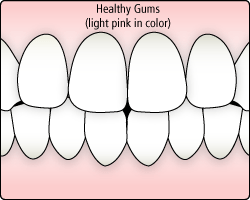
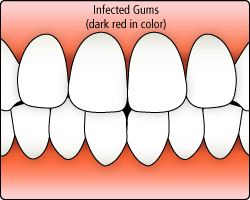
    In the early stage of gum disease, called gingivitis, the gums become red, swollen and bleed easily. At this stage, the disease is still reversible and can usually be eliminated by daily brushing and flossing.


    Periodontitis

    In the more advanced stages of gum disease, called periodontitis, the gums and bone that support the teeth become seriously damaged. Whereas healthy gums and bone anchor teeth firmly in place, infected gums can cause teeth to become loose, fall out, or have to be removed by a dentist.

    Some factors increase the risk of developing periodontal disease: 


    1. Tobacco smoking or chewing

    2. System-wide diseases such as diabetes

    3. Some types of medication such as steroids, some types of anti-epilepsy drugs, cancer therapy drugs, some calcium channel blockers, and oral contraceptives

    4. Bridges that no longer fit properly

    5. Crooked teeth

    6. Fillings that have become defective

    7. Pregnancy


    If you notice any of the following signs of gum disease, see the doctor immediately: 


    1. Gums that bleed easily

    2. Red, swollen, tender gums

    3. Gums that have pulled away from the teeth

    4. Persistent bad breath or bad taste

    5. Pus between your teeth and gums

    6. Permanent teeth that are loose or separating

    7. Any change in the way your teeth fit together when you bite

    8. Any change in the fit of partial dentures


    It is possible to have periodontal disease and have no warning signs. 


    That is one reason why regular dental check-ups and periodontal examinations are very important. Treatment methods depend on the type of disease and how far the condition has progressed.

    Good oral hygiene at home is essential to keep periodontal disease from becoming more serious or recurring. You don't have to lose teeth to periodontal disease. Brush regularly, clean between your teeth, eat a balanced diet, and schedule regular dental visits for a lifetime of healthy smiles.

    Dental Emergencies


    Dental emergencies are quite frightening and often painful.  Prompt treatment is almost always required to alleviate pain and to ensure the teeth have the best possible chance of survival.

    Sometimes teeth become fractured by trauma, grinding or biting on hard objects. In other cases, fillings, crowns and other restorative devices can be damaged or fall out of the mouth completely. If there is severe pain, it is essential to make an appointment with the dentist as quickly as possible. The pain caused by dental emergencies almost always gets worse without treatment, and dental issues can seriously jeopardize physical health.

    Types of dental emergency and how to deal with them


    Avulsed Tooth (Tooth Knocked Out)

     If a tooth has been knocked clean out of the mouth, it is essential to see a dentist immediately. When a tooth exits the mouth, tissues, nerves and blood vessels become damaged. If the tooth can be placed back into its socket within an hour, there is a chance the tissues will grow to support the tooth once again.

    Here are some steps to take:
    1. Call the dentist.

    2. Pick up the tooth by the crown and rinse it under warm water.  DO NOT touch the root.

    3. If possible, place it back into its socket – if not tuck it into the cheek pouch.

    4. If the tooth cannot be placed in the mouth, put the tooth into a cup of milk, saliva, or water as a last resort.  It is important to keep the tooth from drying out.

    5. Get to the dentist, quickly and safely.


    The dentist will try to replace the tooth in its natural socket. In some cases, the tooth will reattach, but if the inner mechanisms of the teeth are seriously damaged, root canal therapy may be necessary.

    Lost Filling or Crown

    Usually, a crown or filling comes loose while eating.  Once it is out of the mouth, the affected tooth may be incredibly sensitive to temperature changes and pressure.  Crowns generally become loose because the tooth beneath is decaying.  The decay causes shape changes in the teeth – meaning that the crown no longer fits.

    If a crown has dropped out of the mouth, make a dental appointment as soon as possible.  Keep the crown in a cool, safe place because there is a possibility that the dentist can reinsert it.  If the crown is out of the mouth for a long period of time, the teeth may shift or sustain further damage.

    When the dentist is not immediately accessible, here are the steps to take:

    1. Apply clove oil to the tooth to alleviate pain.

    2. Clean the crown and affix it onto the tooth with dental cement.  This can be purchased at the local pharmacy.

    3. If the crown is lost, smear the top of the tooth with dental cement to alleviate discomfort.

    4. DO NOT use any kind of glue to affix the crown.

     
    The dentist will check the crown to see if it still fits.  If it does, it will be reattached to the tooth. Where decay is noted, this will be treated and a new crown will be made.

    Cracked or Broken Teeth

    The teeth are strong, but they are still prone to fractures, cracks and breaks.  Sometimes fractures are fairly painless, but if the crack extends down into the root, it is likely that the pain will be extreme.  Fractures, cracks and breaks can take several different forms, but are generally caused by trauma, grinding and biting.  If a tooth has been fractured or cracked, there is no alternative but to see the dentist as quickly as possible.

    Where a segment of tooth has been broken off, here are some steps that can be taken at home:

    1. Call the dentist.

    2. Rinse the tooth fragment and the mouth with lukewarm water.

    3. Apply gauze to the area for ten minutes if there is bleeding.

    4. Place a cold, damp dishtowel on the cheek to minimize swelling and pain.

    5. Cover the affected area with over-the-counter dental cement if there is no way to see the dentist immediately.

    6. Take a topical pain reliever.


    The nature of the break or fracture will limit what the dentist is able to do.  If a fracture or crack extends into the root, root canal therapy may be the only effective way to retain the tooth.  In the case of a complete break, the dentist will usually affix the fragment back onto the tooth as a temporary measure.

    Dislodged/Loose Teeth

    When a tooth has been dislodged or loosened from its socket by trauma or decay, it might be possible to save it.  If the tooth remains in the mouth and attached to the blood vessels and nerves, there is a good chance root canal therapy will not be necessary.

    It is important to call the dentist immediately to make an appointment.  In the meantime, use a cold compress and over-the-counter medications to relieve pain.  The dentist will reposition the tooth and add splints to stabilize it.  If the tooth fails to heal, root canal therapy may be required.

    If you have questions or concerns about dental emergencies, please contact your dentist.

Be Conscious of Your Oral Health

Poor oral health can keep you from doing a lot of things. It can also affect your confidence as an individual. Be empowered by boosting your oral health. If you need professional help, call or visit our dental office today.

Email

Apple Dental Center


1120 West Pioneer Parkway

Arlington, Texas 76013


Phone: External link opens in new tab or window817-261-0900

Fax: 817-261-9633

Email: External link opens in new tab or windowsmiles@appledentalcenter.com

External link opens in new tab or window External link opens in new tab or window External link opens in new tab or window

Address

Hours of Operation


Monday to Friday

8:00 AM – 5:00 PM


Saturday & Sunday

Closed


Apply for Care Credit today!

External link opens in new tab or window


Hours
119556
Invalid Form properties detected

Name:

Phone:

Email:

Questions:

close lightbox